The big, bold part of the Andy Burnham speech yesterday – the triple lock – will now receive a lot of media scrutiny but the debate, as they say, is often generating more heat than light. The triple lock is to give way to, in effect, a double lock in which pensioner’s incomes will always keep pace either with inflation or with 2.5%, whichever is the greater. The ‘third’ leg of the triple log – keeping pace with wages – has only occurred six times in the last sixteen which is evidently less than 40% of the time. The new policy also indicated that periodically the pension would be reevaluated in the light of wages growth to make sure that they did not get out of kilter with each other so the double lock will be, in effect, a 2½ lock. Also the fact that the ‘care’ component of the afflictions of old age will be met by the state rather than by the individual, should be a massive reassurance to many older people, although it must be conceded that the residential ‘living’ costs of care will not be met. I am sure that the new policy is easy to sell, not least because of the prospect of a National Care Service and the Labour party can now campaign on the basis that they brought the NHS into existence and only they have actually brought the National Care Service into being. It is true to say that using the double lock rather than the triple lock will not release funds on the scale that is needed to fund the new service. But perhaps we could take a leaf out of the German’s book where they levy a social care tax from people in their mid 40’s onwards. This is the point at which people are generally well established in their careers and the costs of rearing a family are largely already passed. The Conservatives did introduce a formal ‘Health and Social Care Levy’ under Boris Johnson’s government in September 2021. The tax was designed specifically to tackle the funding crisis in the NHS and adult social care, aiming to cap the lifetime ‘costs of old age’ care at £86,000 per person and was a small percentage increase in National Insurance. But it did not survive the ill-fated Liz Truss regime, but the Labour party could introduce a similar scheme in future years and point gleefully to the fact that a previous Tory administration had introduced the concept of a social care levy. The fact remains that national government are best placed to introduce such universal schemes. With some imaginative thinking, individuals could be encouraged to pay into a ‘Social Care’ fund as a sort of insurance policy and this could itself receive government assistance in the form of tax relief but become a way in which, as a mature industrial society n which we are all living longer and getting commensurately more frail, then the inevitable costs can be met at a societal level. One of my favourite quotations is ‘Taxes are what we pay for civilised society’ and originates, perhaps surprisingly, from the American U.S. Supreme Court Justice Oliver Wendell Holmes Jr, in 1927.
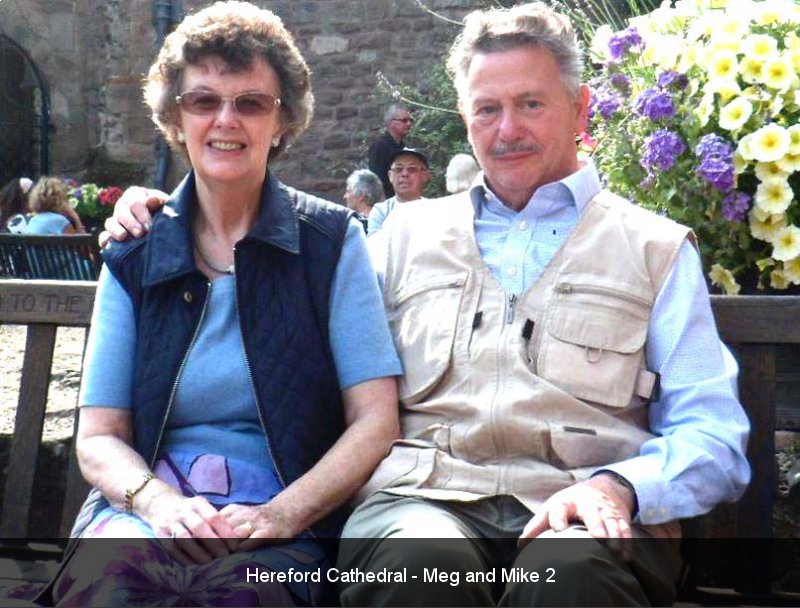
I read this afternoon on Sky News that prosecutions may be forthcoming over the Grenfell fire which took place almost ten years ago. The breaking news is that prosecutors have been asked by the Metropolitan Police to consider manslaughter and a range of other charges against companies and individuals over the Grenfell Tower fire. The force said it has now submitted all its files to the Crown Prosecution Service to allow it to make charging decisions in relation to the June 2017 blaze. The files of evidence, which relate to 20 companies and organisations and 54 individuals, was a ‘milestone moment’ in a ‘truly enormous’ investigation, police said. Seventy-two people died and more than 70 were injured after a fire broke out in the 24-storey Grenfell Tower block of flats in North Kensington, West London. The Met said in a statement that the 20 files relate to 20 companies and organisations and 54 individuals. They ask the CPS to consider charges including corporate manslaughter, gross negligence manslaughter, health and safety offences, fraud and fraud-related offences and misconduct in public office. The CPS has committed to making the charging decisions before the 10th anniversary of the fire in June 2027. Deputy Assistant Commissioner Kevin Southworth added: ‘This is a milestone moment in the police investigation into this devastating tragedy which took the lives of 72 people. Our dedicated team of 220 investigators has worked incredibly hard to honour our commitment to the bereaved, survivors, residents and all those affected by the fire to meet this timescale. We appreciate, of course, it has taken nine years to get to this point. As we have said before, this is one of the most complex investigations ever undertaken by any UK law enforcement agency – the scale is truly enormous. While we know this has had a significant impact on those waiting for answers, it has necessarily taken this long to ensure our investigation is meticulous and presents the very best possible evidence to the CPS for charging decisions.’ If a trial does take place, I have severe doubts whether this long after the event any prosecutions will succeed. Firstly, corporate manslaughter and similar prosecutions are very difficult to prove in law, particularly after a gap of ten years. Secondly, there were reliable reports that on the morning following the disaster, shredders were busy in planning and construction firm offices making sure that no evidence trail existed. And thirdly, we have a long track record of instituting enquiries, in some cases decades after the event (such as the ‘Bloody Sunday’ enquiry, the ‘Hillsborough’ football disaster) none of which generated any prosecutions or findings of guilt. The day proved to be a typical mid-weekday in which I picked up a newspaper and then went off for a coffee in the Methodist centre where there one or two acquaintances with whom I chatted. Then I did a normal weekly shopping in my usual supermarket and cooked myself a lunch of quiche and cabbage. The TV does not look particularly good this evening but there may be another in the medical series on ‘The Body’ starting at 9.00pm which might be worth a watch. In the course of the day, I opened a letter addressed to Meg who has now been dead for over 16 months) explaining that the care for dementia sufferers offered by Age UK in Worcestershire could not now be afforded. The Alzheimer’s society had been awarded a new contract but with no social events, trips, outings or anything comparable with the service offered to Meg in the last year or so of her life by Age UK. I think Meg quite enjoyed the limited social contact provided by these even though each visit was accompanied by a fall somewhere and I wondered to myself whether dementia sufferers are having to bear the brunt of unaffordability in the provision of services.